mistakes to avoid
What should I do when a customer says a candle tunneled or a bar irritated their skin?
A complaint is a traceability question first and a service question second. How to find the lot, judge whether it is a real defect, respond well and decide about a recall.

Before you write a single word back, find out which batch that person is holding. Pull the order, get the lot identifier, and open the production record for it. Everything you say afterwards depends on whether this is one unhappy buyer or the first visible edge of a bad run, and you cannot tell those apart from the message alone.
Then answer generously. Replace or refund quickly, because the cost of one candle is trivial next to a public review, and because a customer who feels heard will often tell you the detail that identifies the real cause.
Those two things happen in that order, not the reverse. A complaint is a traceability question first and a service question second. Here is how to work one properly, including the point where it stops being a service matter and becomes a regulatory one.
Getting the lot identifier from the order before you reply
You need three things: the order number, the item that shipped, and the batch that item came from. If your system links order to batch, this is a thirty second lookup. If it does not, you are reconstructing it from ship dates and inventory guesses, which is exactly when errors enter.
Once you have the batch, read the whole record before responding. Look at the pour or cut date, the wax or oil lot numbers, the fragrance lot, the wick size, the fragrance load, the cure or set date, the unit count, and any note the person who made it left behind. Then ask one more question: how many other units from this batch went out, and to whom?
That last number frames the whole situation. One complaint out of six units sold is a different problem from one complaint out of two hundred.
What to ask the customer
Keep it short and non defensive. Three questions cover most cases:
- A photo of the item as it looks now, plus a photo of the label.
- For a candle: how long was it burning each time, and was the wick trimmed?
- For soap: where on the body, how soon after use, and had they used the same scent before?
The label photo is not a formality. It confirms the batch identifier and tells you whether the item is even yours, which matters more often than you would expect with a resold or gifted product.
Keep reading: Is it worth moving from farmers markets into wholesale accounts over the next year?
Separating use error from a genuine batch defect
Use a simple test. Ask whether the same fault appears in units from other batches, and whether it appears in units of the same batch held by other people.
| Pattern | Most likely reading | Action |
|---|---|---|
| One complaint, one batch, no others from that batch | Use conditions or shipping damage | Replace, note it, watch the batch |
| Several complaints, all one batch | Batch defect | Quarantine remaining stock, contact buyers of that batch |
| Several complaints, one product across batches | Recipe, wick or vessel problem | Stop production of that product, retest |
| Scattered complaints, no pattern | Expectation gap in your listing | Rewrite the product copy and burn instructions |
The second row is the one that requires speed, and it is the row you cannot see at all without batch to order links.
Common tunneling causes and how to explain them fairly
Tunneling is when the flame burns straight down the center and leaves a wall of unmelted wax. Most of the time it is a wick sizing issue, sometimes it is a first burn issue, and often it is both.
Candle wax has a memory. The first burn sets the diameter of the melt pool for every burn after it. If the first session was cut short before the pool reached the edge, the candle will tend to tunnel from then on. That is why every candle should ship with instructions to burn the first session until the pool reaches the glass, usually two to four hours for a standard container.
The other causes worth checking in your record:
- Wick undersized for the vessel diameter, particularly after a fragrance oil change.
- Fragrance load above the wax's rated capacity, which chokes the flame.
- Wick off center, so one side melts and the other does not.
- Drafts, which pull the flame sideways and produce an uneven pool.
Explain it plainly and take your share. Something like: this is usually caused by the first burn being cut short, and if we sized this wick a little small for the fragrance, that is on us. Replacing it either way. That sentence protects the relationship without conceding a defect you have not confirmed.
Keep reading: How does a small studio actually assign lot numbers so one order can be traced back?
Skin reaction reports and what records you need on hand
Soap sold with cosmetic claims, and most bath products generally, sit under FDA cosmetic rules, and those rules changed materially with the Modernization of Cosmetics Regulation Act. If you are the responsible person for a cosmetic product, you are required to keep records of adverse event reports for a defined period and to report serious adverse events to FDA within a set window after receiving them. Read the current FDA guidance yourself rather than taking a summary from anyone, including this one, because the thresholds and small business exemptions matter and they turn on your specific situation.
What is unambiguous is what you should have in front of you when a report arrives:
- The full ingredient list for that batch, with supplier lot numbers.
- The fragrance or essential oil used and its safety documentation from the supplier.
- The date of report, the customer contact, the description in their own words, and what you did.
- Whether a physician was seen and what they said, if the customer volunteers it.
Do not offer a medical opinion. Do not tell someone it cannot be your product. Record what they said, thank them, refund, and keep the file. Irritation from a fragrance component in one person is not proof of a defect, but it is a data point you are obligated to hold and one you want if a pattern emerges around a single fragrance lot.
Deciding whether the issue reaches one order or one batch
Use a decision rule so you are not making this call emotionally at eleven at night.
- Is there any report of fire, glass breakage, burn injury or a serious health effect? If yes, stop selling that batch immediately and get advice before you do anything else. Candles are consumer products under CPSC jurisdiction, and there are legal obligations to report defects that could create a substantial hazard.
- Are there two or more independent reports of the same fault from the same batch? Quarantine the batch and contact every buyer from it.
- Is there one report, but the batch record shows something abnormal, a wrong wick, an over load, a substituted lot? Treat it as a batch issue even without a second report.
- Is there one report and a clean record? Replace the unit, log it against the batch, and set a threshold: a second report on that batch escalates automatically.
Write that rule down and follow it. The value is that it makes step 2 happen on the day it should happen, rather than three weeks later when you finally notice a pattern.
See how WickAndWax handles this for candle and soap making businesses
Voluntary recall mechanics and customer notification
A small voluntary recall is not a catastrophe. Handled quickly it is often the thing customers remember most warmly about you. Handled slowly it becomes the story.
The sequence:
- Stop shipping. Pull remaining units of the batch off every channel, including your market stock and any wholesale accounts.
- Build the buyer list from your batch to order links. This is the step that is impossible without records.
- Contact wholesale accounts by phone first, then in writing, and tell them exactly which batch identifier to pull.
- Email every retail buyer of that batch. State the product, the batch identifier, what the problem is, what they should do with the item, and what you are giving them. Keep it factual.
- For any hazard involving fire or injury, contact CPSC. Reporting requirements for defects that create a substantial product hazard are time bound and they are not optional.
- Keep every piece of correspondence with the batch file.
Offer a full refund without requiring a return of a potentially unsafe item. Asking someone to mail back a candle you think might be a fire risk is the wrong instruction.
Fixing the batch record so the cause is visible next time
Close the loop in the record itself, not in your memory. Add a dated note to the batch: what was reported, what you concluded, what you changed. If you resized the wick, write the old size and the new one. If you dropped a fragrance load from 10 percent to 8, write that.
Then check whether the same cause could exist in other live batches. A fragrance lot that behaved badly in one candle is likely sitting in three other recipes.
The system that makes this a short conversation
Every step above collapses or expands depending on one thing: whether you can go from an order number to a batch, and from a batch to every order it touched, in seconds.
WickAndWax holds the batch record with its ingredient lots and cure dates, prints the batch identifier onto the label so it comes back to you on a customer photo, and keeps the order to batch link in both directions. When a complaint arrives you open the batch, see the eleven other people who have it, and act before the pattern becomes a story.
Read also

Is it worth moving from farmers markets into wholesale accounts over the next year?
Wholesale trades margin for volume and predictability, and it raises the bar on labeling, lot codes and lead time. What changes in the work when a shop places a standing order.
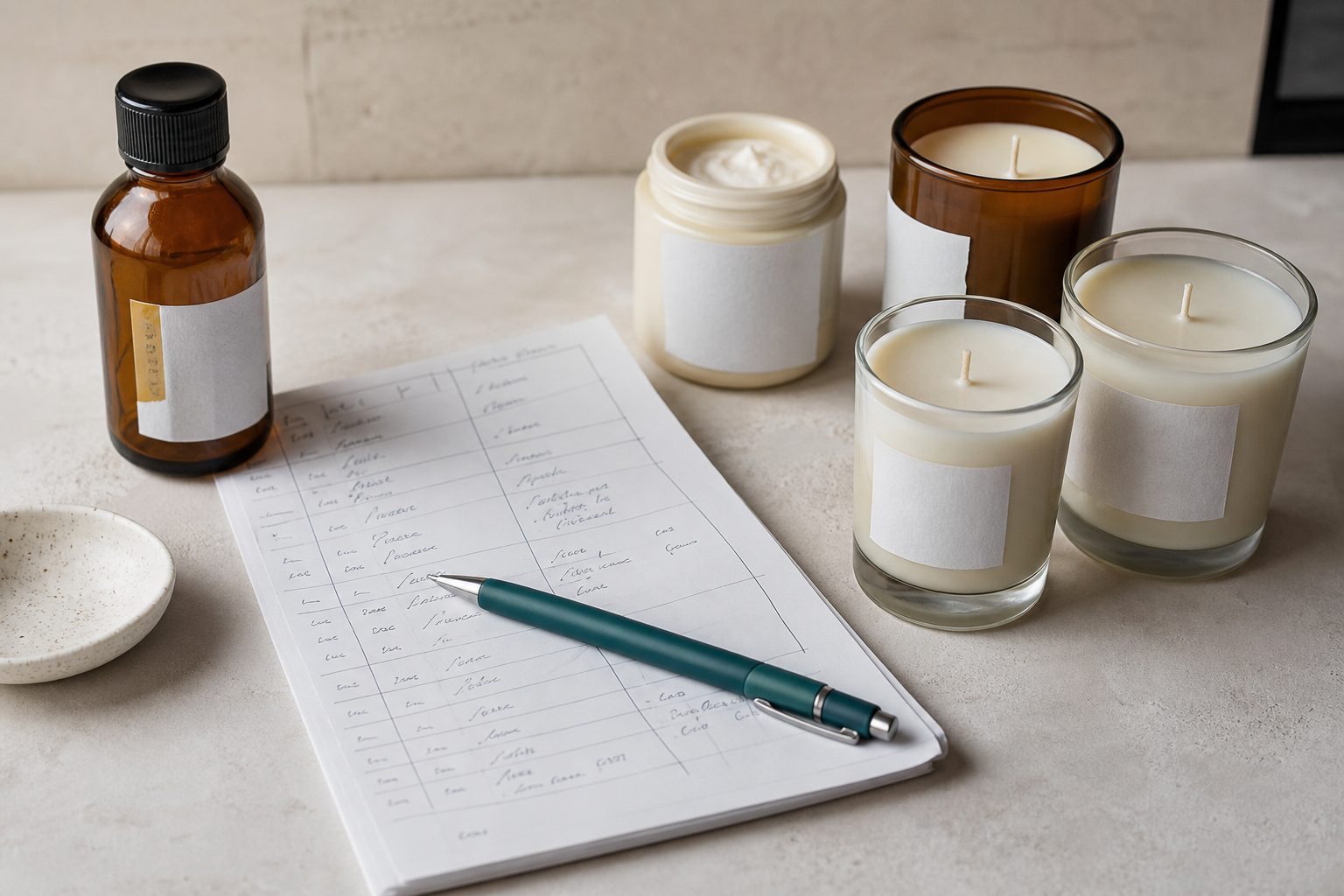
How does a small studio actually assign lot numbers so one order can be traced back?
Following one fragrance lot from delivery through pour, cure, label and shipped order shows exactly where lot data has to be captured and how a simple coding scheme holds up.

What does a busy holiday production week actually look like in a one person studio?
From wax melt schedules to label printing and cure bottlenecks, a walk through the constraints that decide how many units one maker can honestly ship in a peak week.