case study
How does a small studio actually assign lot numbers so one order can be traced back?
Following one fragrance lot from delivery through pour, cure, label and shipped order shows exactly where lot data has to be captured and how a simple coding scheme holds up.

A workable lot number is a short code that names one production run, gets recorded at four moments, and never gets reused. Receiving, pour, label and shipment. Capture it at those four points and any unit that leaves your studio can be walked backward to the exact drum of wax and the exact bottle of fragrance that went into it.
That is the whole idea. The difficulty is never the code itself, it is the discipline of writing it down when your hands are full and the pitcher is at pour temperature.
What follows traces one fragrance lot through a two person soap and candle studio, from the delivery on a Tuesday to a customer email nine months later asking what was in her bar.
Receiving: recording supplier lots for wax, oils and fragrance
The delivery is three cases of fragrance oil, a pallet of wax slabs and a carton of shea butter. Every one of them carries a supplier lot on the container or the packing slip. That is the anchor for everything downstream, and it is the piece most studios lose first, because the sticker is on a bottle that gets recycled.
The receiving routine takes about four minutes per delivery:
- Photograph the packing slip and the lot sticker on at least one container from each case.
- Write the supplier lot, the material name, the quantity, the date received and the supplier onto your materials log.
- Give each received quantity your own internal receipt number, because two different suppliers will eventually use the same lot format.
- Mark the containers with that receipt number in marker, large enough to read from the shelf.
In this studio the fragrance arrived as supplier lot 24C7719, sixteen pounds of a cedar and amber blend. It was received on March 4 and marked FR-0412 on every bottle. From that point, nobody in the studio has to squint at a small printed sticker again.
Why the internal receipt number matters
Suppliers reuse formats. A wax vendor and an oil vendor may both stamp something like 0412A. If your batch sheet says only that, you have a guessing game later. Your own sequential receipt number is unique by construction, and it points to a row that holds the supplier lot verbatim.
Keep reading: What does a busy holiday production week actually look like in a one person studio?
Designing a lot code that still reads clearly a year later
Two competing pressures. The code must fit on a small label without crowding the required information, and it must mean something when you read it cold in twelve months.
The scheme this studio settled on is date first, product second, sequence third:
250304-CDR-02
- 250304 is the pour date in year, month, day. Sorting is automatic and the age of the stock is obvious at a glance.
- CDR is a three letter product code, cedar and amber candle. Soap bars in the same scent use CDS so the two never collide.
- 02 is the second batch of that product poured that day.
Eleven characters, prints small, and it never repeats. Compare the alternatives honestly:
| Scheme | Reads well later | Risk |
|---|---|---|
| Sequential only, 0001, 0002 | Poor | Tells you nothing without the log open |
| Julian date, 25063 | Fair | Compact, but you will misread it under pressure |
| Date, product, sequence | Good | Slightly longer on the label |
| Anything with a slash or a space | Varies | Breaks sorting and filenames |
Avoid letters that read as digits. No lone I, O or Q in a product code. Keep the separator a hyphen and use it consistently.
Where the code gets written during pour and cure
The lot code is created before the wax is melted, not after. Write the batch sheet header first: date, product, sequence, target unit count, and then the material lines with your receipt numbers.
On March 4 the sheet read: 250304-CDR-02, 48 units, wax WX-0388, fragrance FR-0412, wicks WK-0121, vessels VS-0205. Fragrance load 8 percent, pour temperature 135 degrees, ambient 68 degrees.
Then the code goes onto the physical work in progress immediately. A strip of blue tape across the front of the curing rack shelf with the code and the pour date in marker. If the batch spans two shelves, both shelves get tape. If a few units get pulled for a sample, they get their own tape.
The rule that prevents most trouble: nothing moves off the pour bench without a code attached to it. Unlabeled units on a cure rack are the single most common way a trace breaks.
Recording the things you will want later
While the sheet is open, note the actual yield rather than the target. Forty eight planned, forty six good, two wicks off center and set aside. That two unit difference is what makes your inventory match reality nine months from now.
Keep reading: What exactly has to appear on a candle label before I can legally sell it at a market?
Printing the lot onto the label without a reprint bottleneck
Here is the trap. If the lot code sits on the same label as your artwork, every batch needs a fresh print run, and you cannot buy labels in economical quantities. Many makers respond by printing the front label in bulk with no code, then discovering the code lives nowhere on the product.
Three approaches that work:
- Two label system. A bulk printed front label with brand and scent, and a small bottom or back label printed per batch carrying net weight, warnings, ingredients where required, and the lot code. This is the most common solution and the most flexible.
- Print on demand for everything. A thermal transfer or inkjet label printer in the studio, artwork and lot printed together at pack time. Higher per label cost, zero obsolete stock.
- Stamp or hand write into a blank field. A cleared box on the bulk label and a fine tip permanent marker or a small date stamp. Cheapest, slowest, and it looks handmade, which for some brands is fine.
Whichever you pick, the code must be on the retail unit itself, not only the shipping carton. Once a candle is on a customer's shelf the carton is long gone.
Linking the shipped order back to the batch record
The last link is the one people skip. You know what you made. You need to know who got it.
At pack time, the packer writes the lot code for each item next to the line on the pick list, then that pick list is stored with the order number. For an online order that means order 1188 shipped on March 22 contained two units of 250304-CDR-02 and one of 250228-LAV-01.
If you sell at markets, you cannot capture a buyer, but you can capture the date and which lots were on the table. A one line note at the end of the market day, listing the codes you sold from, is enough to answer a question later.
The linkage only has to be good enough to answer two questions: given an order, which lots, and given a lot, which orders.
See how WickAndWax handles this for candle and soap making businesses
Running the trace backward when a supplier issues a notice
In December, the fragrance supplier sent a notice about lot 24C7719: a labeling correction on an allergen declaration, not a safety recall, but customers with the ingredient list on the box needed accurate wording.
The trace took under an hour:
- Supplier lot 24C7719 mapped to internal receipt FR-0412 in the materials log.
- FR-0412 appeared on five batch sheets between March 4 and April 19, three candle and two soap.
- Those five lot codes were searched against pick lists, returning 214 units across 96 orders and two wholesale shipments.
- Thirty one units were still in the studio and were pulled and relabeled.
- The 96 direct customers got an email with corrected wording, and the two shops got replacement bottom labels by mail.
Without the receipt number, step one is impossible and everything after it is a guess. That is the entire argument for the four minutes at receiving.
What broke in this studio's first system and the fix
The first version failed in three specific ways, and they are common enough to be worth naming.
Codes written only on the batch sheet. Curing units sat on the rack unmarked, and when two cedar batches poured a week apart ended up on the same shelf, they merged. Fix: tape on the rack, no exceptions, and separate shelves for separate lots.
Sequence numbers restarted by memory. Two batches were both called 01 because nobody checked. Fix: the sequence is assigned when the batch sheet is created, from the log, not from recollection.
The pick list link was optional. During the November rush, packing outran paperwork and three weeks of orders had no lot recorded. Fix: the lot field became part of the pack step itself rather than a note added afterward, so an order cannot be marked packed without it.
That last one is the real lesson. Any step that depends on someone remembering to do it later will fail in your busiest month, which is exactly the month you most need the records.
Making it stick
Start with the receiving log, because everything else hangs off it. Then pick a code format and write it on the wall so you stop improvising. Then make the pack step require a lot code.
If you would rather not maintain that chain by hand, this is precisely what WickAndWax does: ingredient lots recorded at receiving, batch records that carry those lots through pour and cure, labels generated with the lot code already on them, and shipped orders tied back to the batch they came from. When a supplier notice arrives, the list of affected orders is a search rather than an evening with a binder.
Read also

What does a busy holiday production week actually look like in a one person studio?
From wax melt schedules to label printing and cure bottlenecks, a walk through the constraints that decide how many units one maker can honestly ship in a peak week.
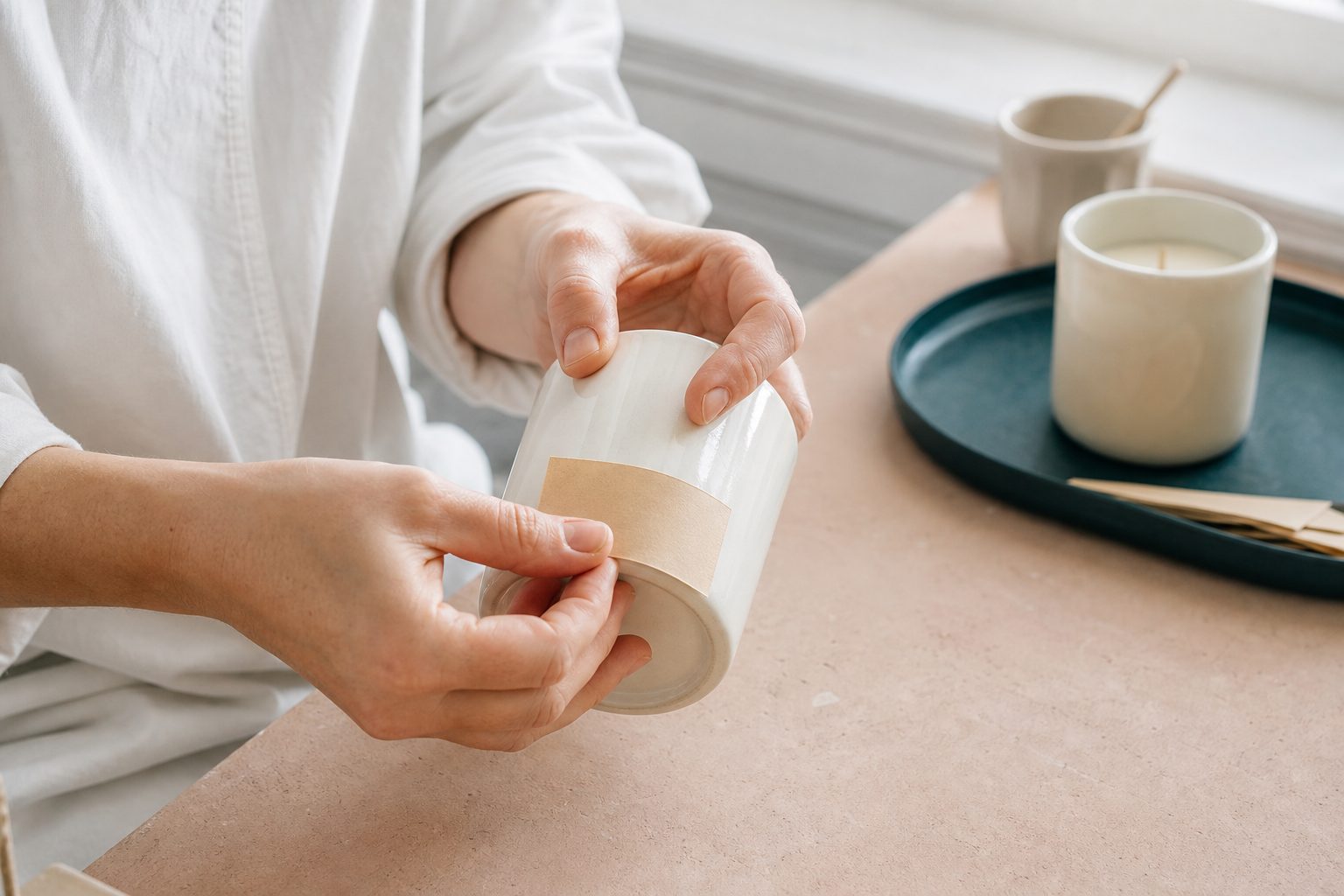
What exactly has to appear on a candle label before I can legally sell it at a market?
Candle labels answer to the Fair Packaging and Labeling Act plus fire safety warning standards. Here is the required identity, net weight, responsible party and warning copy, and where each one goes.
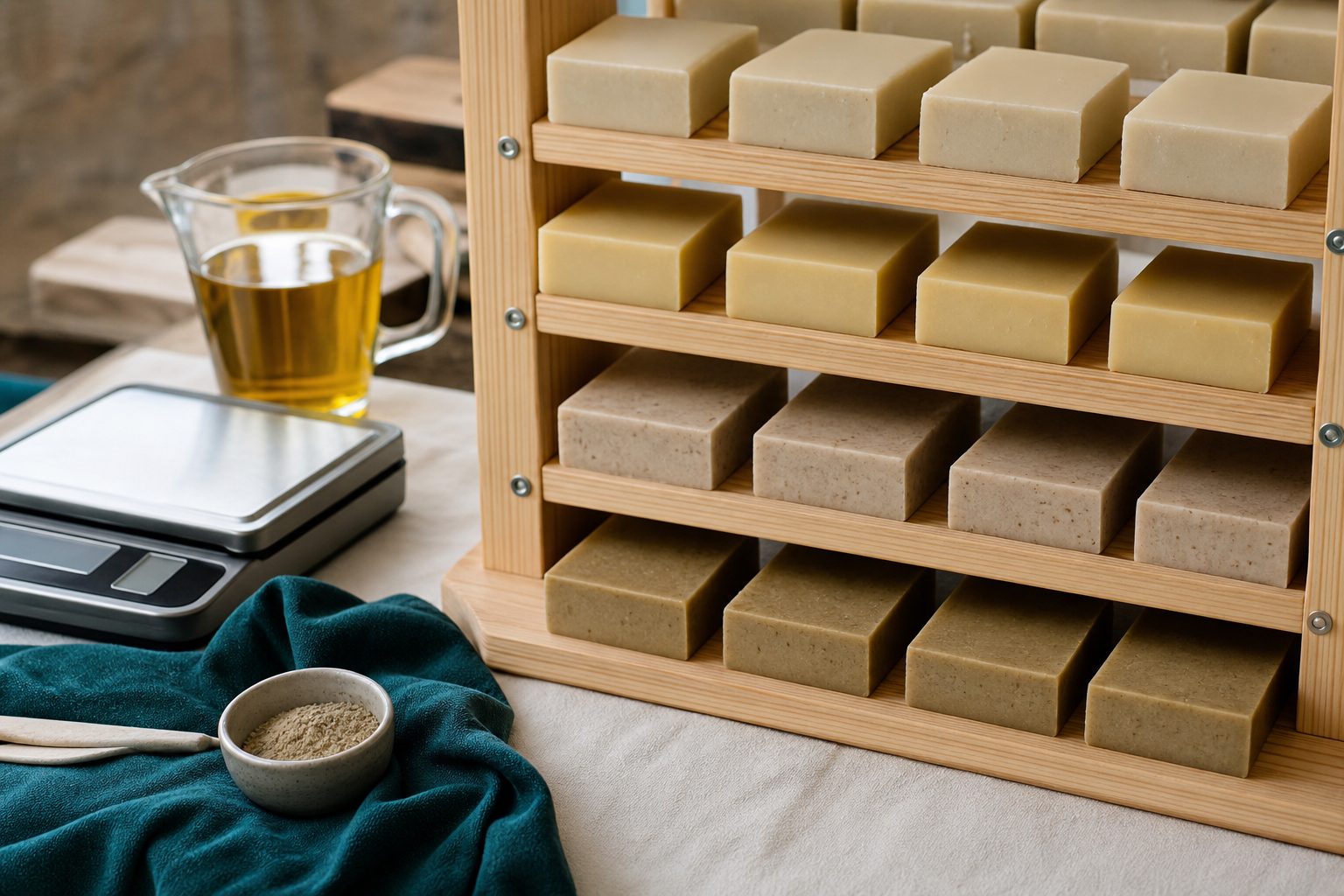
How do I figure out my true cost per bar of soap when I buy oils in bulk?
Bulk oil pricing, cure loss, packaging and rejected bars all move your real unit cost. This walks through building a per bar figure you can price against with confidence.