checklist
How long should soap really cure before I ship it, and how do I track that?
Cure time affects hardness, mildness and how a bar holds up in transit. A working system for setting cure dates per batch and knowing which rack is ready to pack.
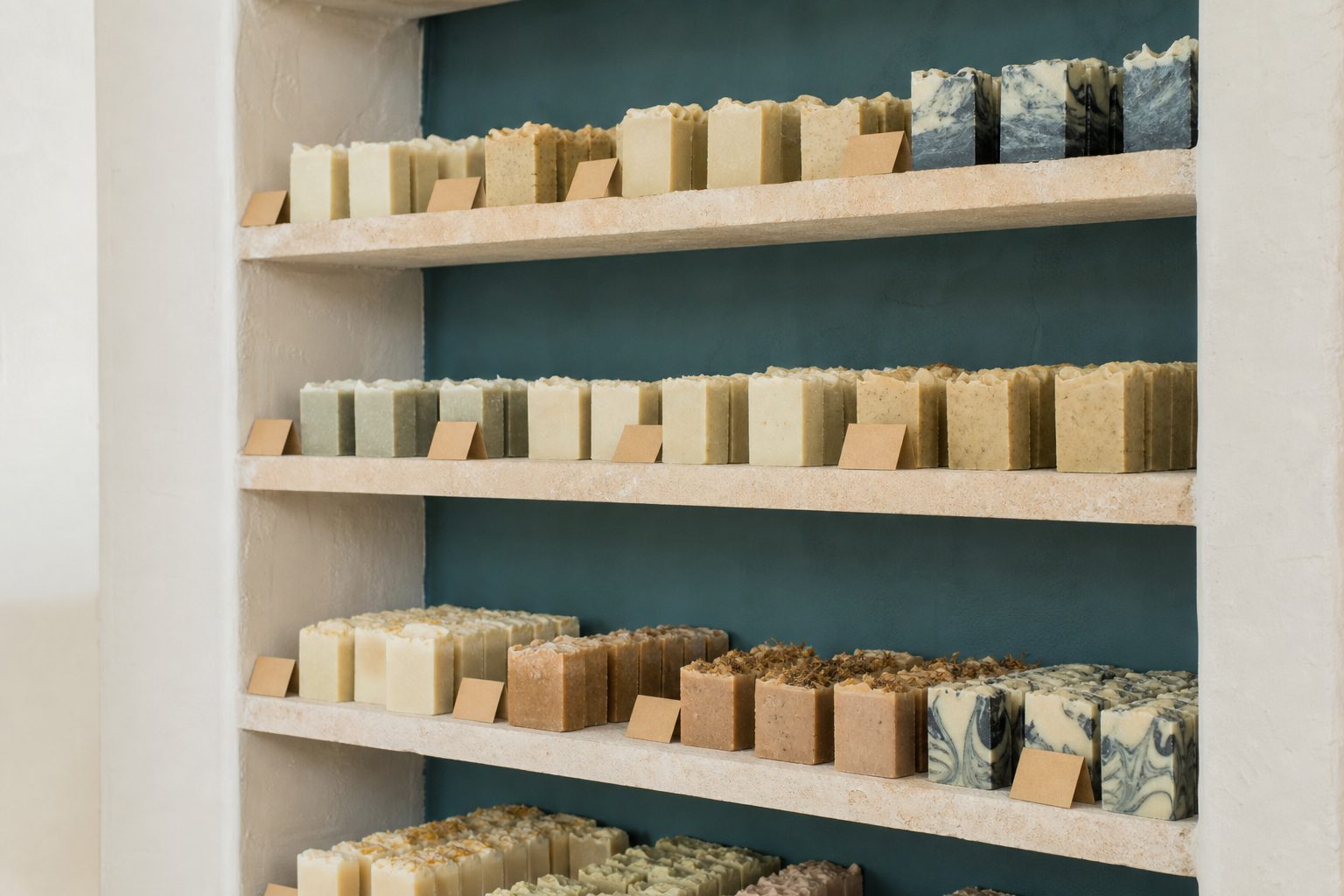
For a standard cold process bar, four weeks is the working minimum and six weeks is the number you should build your calendar around. Hot process bars are safe to use sooner, but they still benefit from three to four weeks of drying before they go in a box. Bars that are heavy in olive oil want longer, often eight weeks or more.
The reason has almost nothing to do with safety. Saponification, the reaction that turns lye and oils into soap, is essentially finished within a day or two. What the cure period is doing is driving water out of the bar. That water loss is what makes a bar hard, long lasting, mild feeling and able to survive a week in transit without denting.
The harder question is not how long. It is how you know which rack is ready on a Tuesday morning when you have forty orders to pack and three batches on the shelf that look identical. That is a records problem, and it is solvable.
What actually happens during the cure period
Three separate things are going on, and they finish at different times.
First, saponification completes. In cold process this is largely done within 24 to 48 hours as the batch goes through gel phase and cools. A zap test, touching the tip of your tongue to the bar and feeling for a sharp electrical tingle, tells you whether free alkali remains. No zap means the reaction is done. It does not mean the bar is finished.
Second, water evaporates. A cold process bar can be well over 30 percent water at unmolding depending on your lye concentration. Most of that leaves over the following weeks. This is the slow part and the part that determines when you can ship.
Third, the crystal structure reorganizes. Soap molecules pack more tightly over time, which is why a bar that felt firm at two weeks feels genuinely dense at six. This is also why a well cured bar lasts noticeably longer in the shower, which customers notice and mention.
Keep reading: What should I do when a customer says a candle tunneled or a bar irritated their skin?
Typical cure windows by recipe type and superfat level
Use these as planning defaults, then adjust from your own weight data.
| Recipe type | Planning cure | Why |
|---|---|---|
| Balanced cold process, coconut and palm and olive | 4 to 6 weeks | Standard water loss curve, firms up predictably |
| High olive or castile | 8 weeks to 6 months | Soft at unmolding, hardness gains continue for months |
| High coconut, salt or laundry bars | 3 to 4 weeks | Hardens fast, main constraint is water loss not firmness |
| Hot process | 2 to 4 weeks | Cook completes saponification, drying still required |
| Melt and pour | None | Already saponified, package once fully set and wrapped |
Superfat, the percentage of oil left unsaponified on purpose, is usually set between 3 and 8 percent. Higher superfat gives a milder bar and a softer one, and it raises your risk of the free oils going rancid, showing up as orange speckles. If you run a high superfat, a longer cure in good airflow matters more, not less.
Testing hardness and weight loss instead of guessing
The single most useful practice in a soap studio is weighing a witness bar. Pull one bar from each batch at cutting, mark it as the witness, weigh it, and weigh it again on a schedule.
Here is a worked example with assumed numbers, so you can see the shape of the curve.
- Day 1 at cut: 4.60 oz
- Day 7: 4.32 oz, a 6.1 percent loss
- Day 14: 4.18 oz, cumulative 9.1 percent
- Day 28: 4.06 oz, cumulative 11.7 percent
- Day 42: 4.02 oz, cumulative 12.6 percent
- Day 49: 4.01 oz, cumulative 12.8 percent
The signal you are looking for is the flattening. Between day 42 and day 49 the bar lost a quarter of one percent. That batch has given up the water it is going to give up in your studio conditions, and it is stable enough to label with a confident net weight.
That last point is the commercial reason to do this. Net weight on a cosmetic label has to be accurate, and a bar that keeps shedding water after you print the label will drift under the stated weight. Weighing at the point where the curve flattens gives you a number that holds.
The simple hardness checks
Press a thumbnail into the edge of the witness bar. At one week it will dent easily. At four to six weeks on a balanced recipe it should resist. Drop the bar four inches onto a bench: a cured bar makes a sharp click, an undercured one lands with a dull thud.
Keep reading: Is it worth moving from farmers markets into wholesale accounts over the next year?
Labeling racks so cure dates survive a busy studio
Every studio starts with someone confident they will remember, and every studio eventually ships an undercured batch. Write it down at the rack.
A rack card needs five things and nothing else: batch number, recipe name, cut date, ship ready date, and unit count. Put the ship ready date in the largest text on the card, because that is the field anyone glances at while carrying a tray.
Two habits make this hold up under pressure:
- Never move bars between racks without moving the card in the same motion. Card and bars travel together, always.
- Give every batch a number that includes the year, so batch 2026-014 can never be confused with a batch from two seasons ago.
Setting a ship ready date at the moment of pour
Calculate the date once, at pour, when you already have the recipe in front of you. Do not calculate it later when you are trying to fill an order, because that is when optimism creeps in.
The rule is simple: ship ready date equals cut date plus the cure window for that recipe family, plus a three day buffer. The buffer absorbs a cold week, a humid week, or a batch that cut a day late.
So a balanced cold process batch cut on March 3 with a six week window plus buffer gets a ship ready date of April 17. Write April 17 on the card. Write it in your records. Do not write "six weeks" and expect your future self to do arithmetic on a market morning.
See how WickAndWax handles this for candle and soap making businesses
Handling rush orders without shortening the cure
The pressure is real: a wholesale account wants two hundred bars in three weeks, or a customer wants a wedding favor order for a date that does not work. Shortening a cure to meet it is how you end up with soft bars arriving dented and a customer telling you the soap dissolved in four days.
Better answers, roughly in order of how often they work:
- Ship a different scent that is already cured. Most customers care more about arrival date than about the exact fragrance.
- Split the order. Send what is ready now, send the rest on the ship ready date, with the dates stated up front.
- Quote the real lead time and hold it. A wholesale buyer who is told six weeks plans around six weeks. One who is told two and receives soft bars does not reorder.
- Keep standing safety stock of your three best sellers, poured on a rolling schedule so something is always past its ship ready date.
The fourth one is the actual fix. Rush orders are a forecasting failure disguised as a cure problem.
A weekly cure audit you can finish in ten minutes
Pick the same slot every week. Monday morning before the studio warms up works well because it also tells you what you can promise that week.
- Walk the racks with the current date in mind. Move any batch whose ship ready date has passed to the packing shelf.
- Weigh the witness bar for every batch in its final two weeks and log the number.
- Flag any batch whose weight is still dropping more than half a percent week over week. It stays on the rack.
- Look for orange speckles, sweating or soft edges. Pull anything suspect and note it against the batch.
- Check that every rack still has a legible card. Rewrite any that have gone soft or smudged.
- Update your batch records so the ship ready status matches what is physically on the shelf.
- Count packable units per scent and write the totals where whoever fills orders will see them.
Ten minutes, once a week, and you never again guess whether a rack is ready.
Making this the default rather than the discipline
Everything above works on paper cards, and paper is a perfectly honest system until the day you need to know which batch went into an order shipped in February. Then you are reading handwriting.
WickAndWax sets the ship ready date automatically when you record the pour, holds the cure clock for each batch, prints the label with the batch identifier and net weight, and ties every batch to the orders it shipped in. The rack still needs walking. It just no longer needs remembering.
Read also

What should I do when a customer says a candle tunneled or a bar irritated their skin?
A complaint is a traceability question first and a service question second. How to find the lot, judge whether it is a real defect, respond well and decide about a recall.
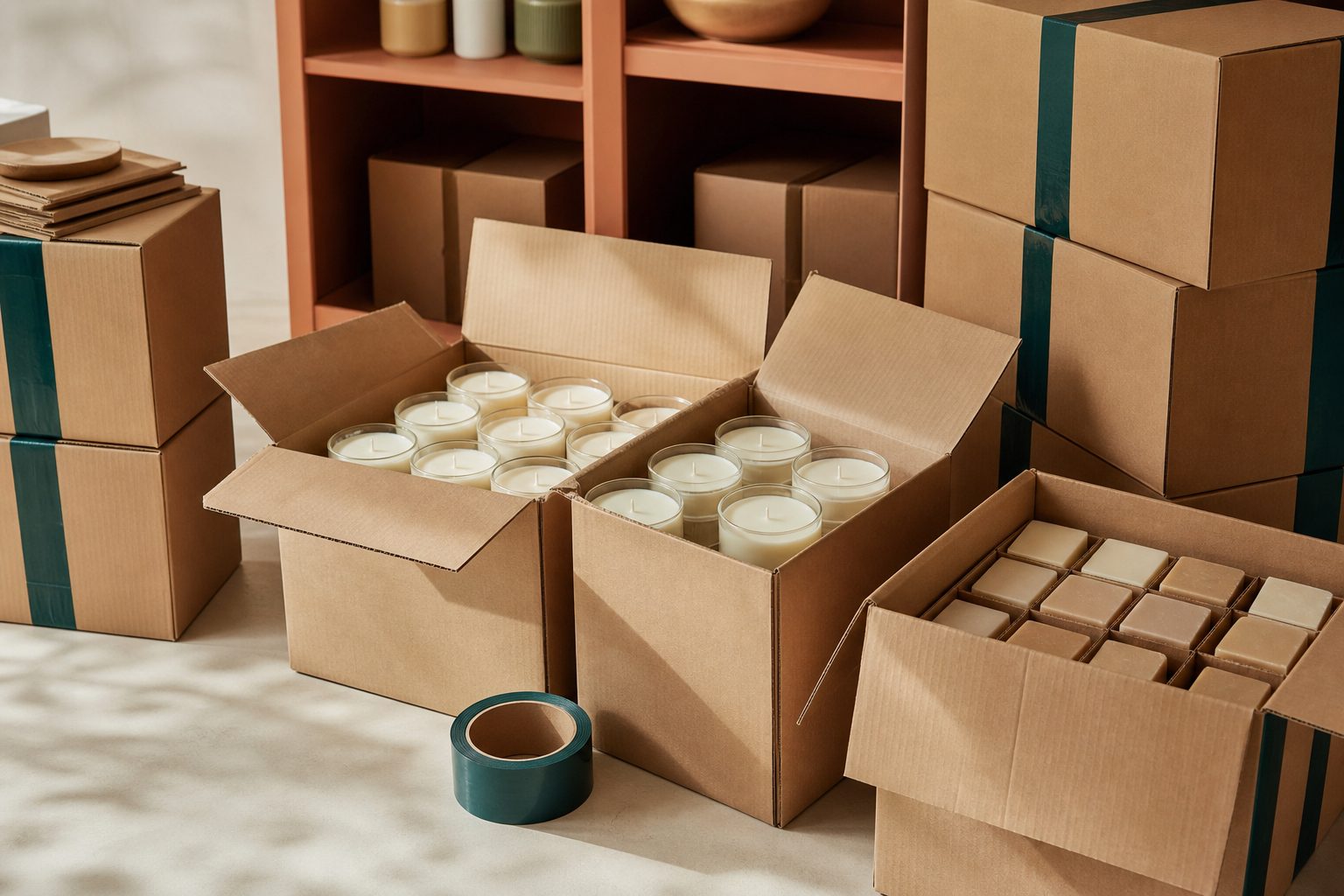
Is it worth moving from farmers markets into wholesale accounts over the next year?
Wholesale trades margin for volume and predictability, and it raises the bar on labeling, lot codes and lead time. What changes in the work when a shop places a standing order.
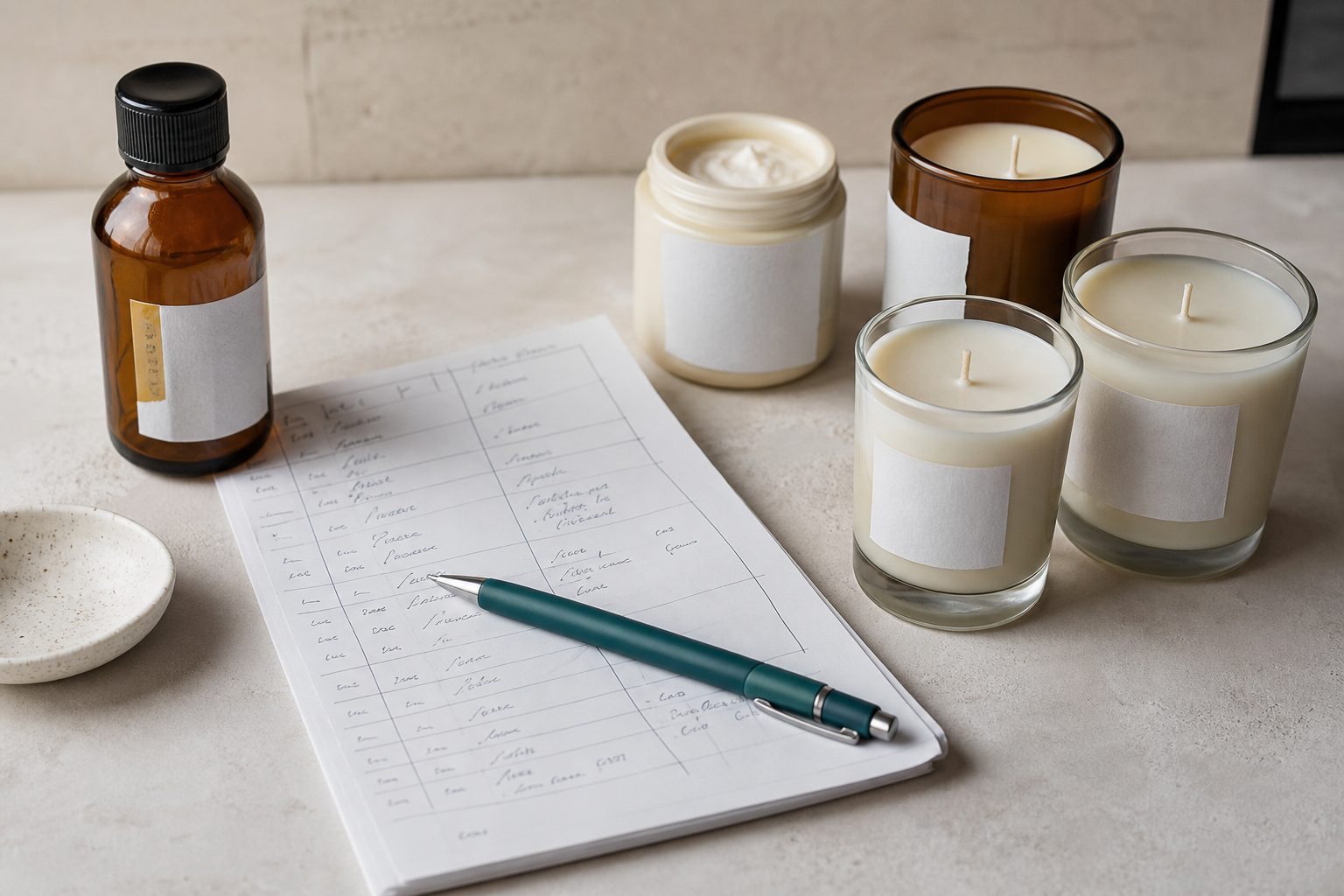
How does a small studio actually assign lot numbers so one order can be traced back?
Following one fragrance lot from delivery through pour, cure, label and shipped order shows exactly where lot data has to be captured and how a simple coding scheme holds up.